
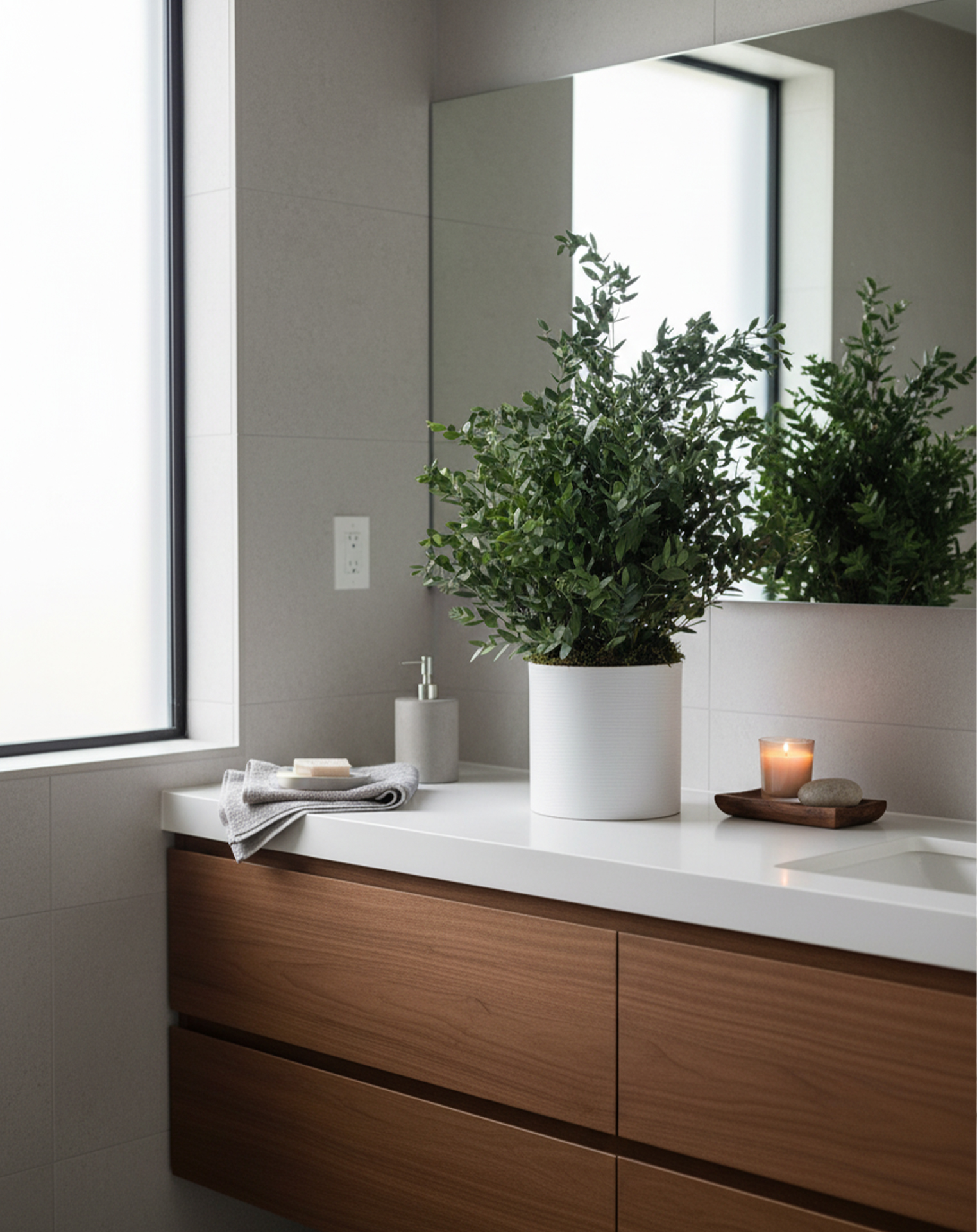
There are plenty of myths about preserved plants. Some people think they last forever. Others think they are a clever marketing trick for selling artificial plants. The reality is that they are a newer solution with nothing to do with artificial plants, one that lets you enjoy natural plants indoors, looking fresh, for years.
The first and most important fact: preserved plants are real plants. Their growth has been stopped at a certain point in their life cycle and their sap replaced with a biological preserving solution that keeps the plant’s shape, colour and softness. The plant does not grow and needs no care, but it keeps its natural appearance for years.
Average lifespan: years, not months
In normal indoor conditions, quality preserved plants last 5 years or more, and in some cases considerably longer. It is important to understand, though, that a preserved plant is not an “eternal object”. Over time you can expect a slight change in colour, some loss of softness or a deepening of tones. This is a natural process.
That is why it makes sense to think of a preserved plant as a long-lasting design element, not a promise of eternal freshness.
What affects how long preserved plants last?
The most important factors are:
- Direct sunlight: UV radiation speeds up colour fading
- Air that is too dry or too humid: very dry or damp rooms are not ideal
- Handling: constant touching and moving the branches wears them down
A normal home or office environment usually suits preserved plants very well.
When is a preserved plant a good choice?
Preserved plants work especially well in spaces where:
- living plants do not survive (dark corners, hallways, windowless rooms)
- you want a maintenance-free, stable solution
- a clean, minimalist aesthetic matters
They are not meant to replace nature, but to bring nature to places where it would not otherwise stay alive.