
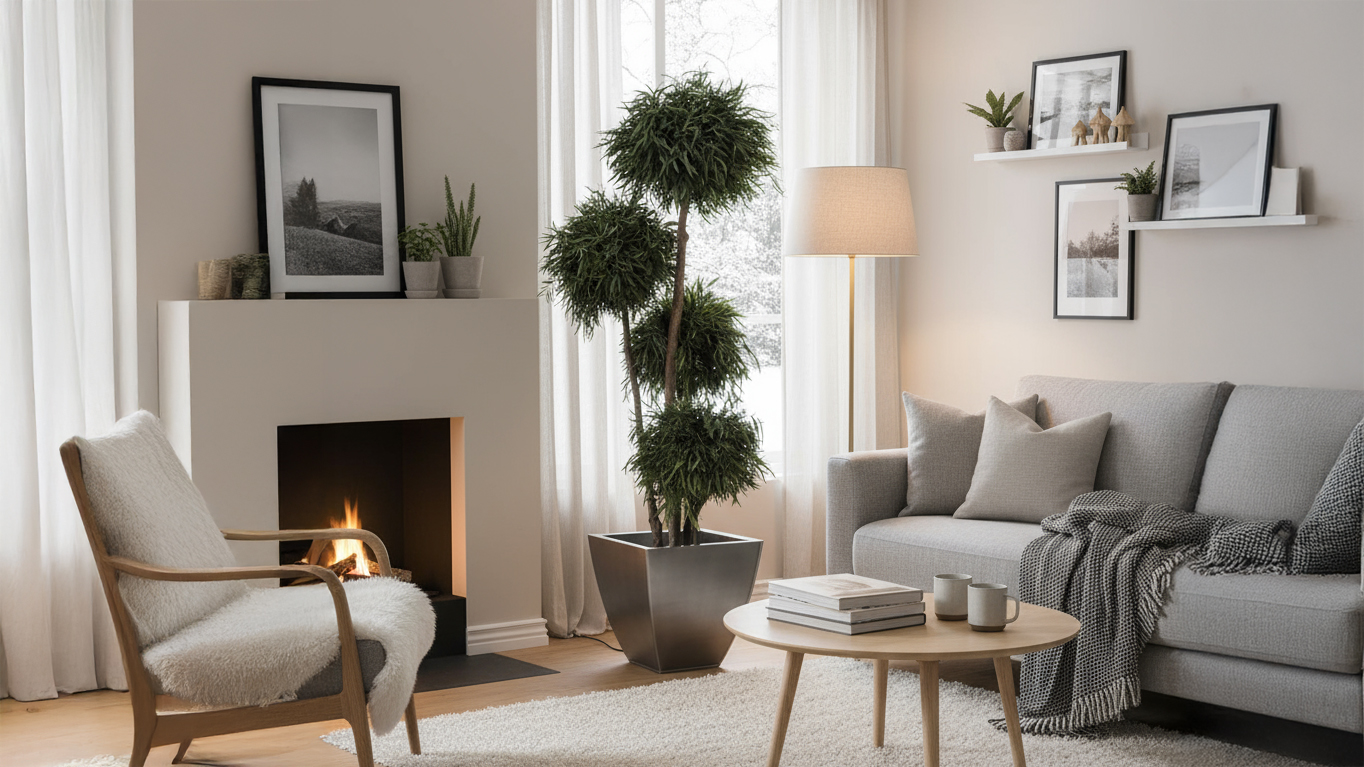
When people consider using preserved trees or greenery in their interiors, many questions arise. Below are the most frequent concerns—and answers to help you feel confident in choosing preserved greenery.
Q: Are preserved plants “real,” or are they just fancy plastic?
A: Preserved plants begin life just like any living plant. They are naturally grown and then undergo a preservation process that replaces their sap with a stabilizing solution (typically a mix of glycerin, water, and plant-safe additives). This keeps their texture, shape, and color intact for years without the need for watering, soil, or sunlight.
Because they are real plants, preserved specimens tend to look more authentic and natural than plastic or synthetic imitations.
Q: How long do preserved plants last? Will they fade or degrade quickly?
A: The lifespan of preserved plants varies depending on the quality of preservation, environmental conditions, and handling. Under ideal indoor conditions—they can remain visually beautiful for ca 5 years or even longer.
That said, the term “lifespan” is a bit misleading, because preserved plants are no longer alive in the traditional sense. Rather, their “quality of life” slowly evolves. Some may fade, darken, or slightly change texture over time, especially if exposed to UV light, humidity swings, or rough handling.
Q: Will the color fade or change over time?
A: Yes — fading or slight color shifts are possible, especially when the plant is exposed to direct sunlight or strong artificial lighting for extended periods.
To slow down fading:
- Place preserved plants away from direct sun or strong windows
- Avoid proximity to heat sources (radiators, halogen lamps)
- Keep humidity and temperature relatively stable
- Use UV-filtering glass or shades if necessary
Q: Do preserved plants require maintenance (dusting, cleaning, etc.)?
A: Yes, but very minimal. Unlike live plants, preserved ones don’t need water, soil, or pruning. The only “maintenance” is occasional dusting. Best practices include:
- Use a soft brush (e.g. makeup or artist brush) to gently sweep away dust
- A handheld leaf blower (on low/cool) or soft air can also work
- Avoid dampness or sprays
- Handle with care — preserved foliage can be more delicate than live leaves
These basic steps can help maintain the fresh appearance over many years.
Q: Are preserved plants safe (non-toxic)? Especially for homes with children or pets?
A: Preserved plants are considered non-toxic and safe to the touch, because the chemicals used are typically non-corrosive, non-carcinogenic, and stable.
That said, since they are no longer living, some caution is wise:
- Avoid ingestion — like many decorative items, preserved foliage should not be eaten
- Keep them out of reach of small children or pets who might chew on leaves
- Some preserved floral arrangements may have sharp stems, ribbons, or small parts (choking hazard)
Q: Do preserved plants provide any of the “benefits” that live plants do (air purification, humidity regulation, scent)?
A: Preserved plants do not perform the active biological functions of live plants. That means:
- They don’t photosynthesize, so they don’t absorb CO₂ or release oxygen
- They don’t regulate humidity or transpire water
- They don’t produce scent or fragrance
However, they do offer other benefits:
- They don’t attract allergens or pollen, making them more suitable in allergy-prone spaces
- They reduce waste compared to frequently replacing dying live plants
- They bring the visual warmth, texture, and calming presence of nature without upkeep
- They don’t release volatile compounds from plastics like artificial plants might
Q: Are preserved plants fragile or easily damaged?
A: Yes — they can be more delicate than live plants, especially the tips of leaves or thin stems. Rough handling, bending, or pressure can cause breakage.
To protect them:
- Avoid moving them frequently
- Be careful when styling or cleaning around them
- Use stable supports and avoid overcrowding
- In event or rental scenarios, ensure sturdy placement and gentle logistics
Q: Why are preserved plants more expensive than artificial ones?
A: The higher cost is largely due to:
- The specialized preservation process (which can take 7–20 days or more, depending on plant size and type)
- The careful selection of raw plant material
- Quality control steps to preserve texture, color, and structural integrity
- Lower economies of scale (only certain plant species are suitable for preservation)
While the upfront cost is higher, preserved plants can be more cost-effective over time due to negligible maintenance and fewer replacements.
Q: Can I mix preserved plants with live ones?
A: Absolutely. Many designers combine preserved and live plants to achieve a balance of visual longevity and biodiversity. For example, use preserved greenery in low-light or low-maintenance zones and live plants where care is feasible.
Just be mindful that preserved plants must be kept in stable conditions and not overwatered when near live greenery.
Q: Where should I (or shouldn’t I) place preserved plants?
A: Best placement tips:
- Indoors — they are designed for indoor display
- Avoid direct sunlight / strong UV exposure
- Avoid placing too close to heat sources or open vents
- Keep humidity at moderate levels (avoid overly humid bathrooms or kitchens)
- Avoid outdoor use unless under full cover and protected from weather
By following these guidelines, you’ll extend the visual life of your preserved trees and plants.
In Summary
Preserved plants combine the beauty of nature with minimal effort. They are real, stabilized greenery that can last for years. But they’re not magical — their longevity and performance depend on care, environment, and quality. As with any decorative choice, it’s wise to ask your provider detailed questions: which species were preserved, by what method, and what guarantees or revitalization options exist.
At Arborea, we stand by our craftsmanship and transparency. We select high-quality plant material, follow responsible preservation methods, and offer guidance so your greenery continues to enrich your space beautifully over time.
If you have more specific questions—about species, installation, or custom use—just ask. We are be happy to help you navigate them.